
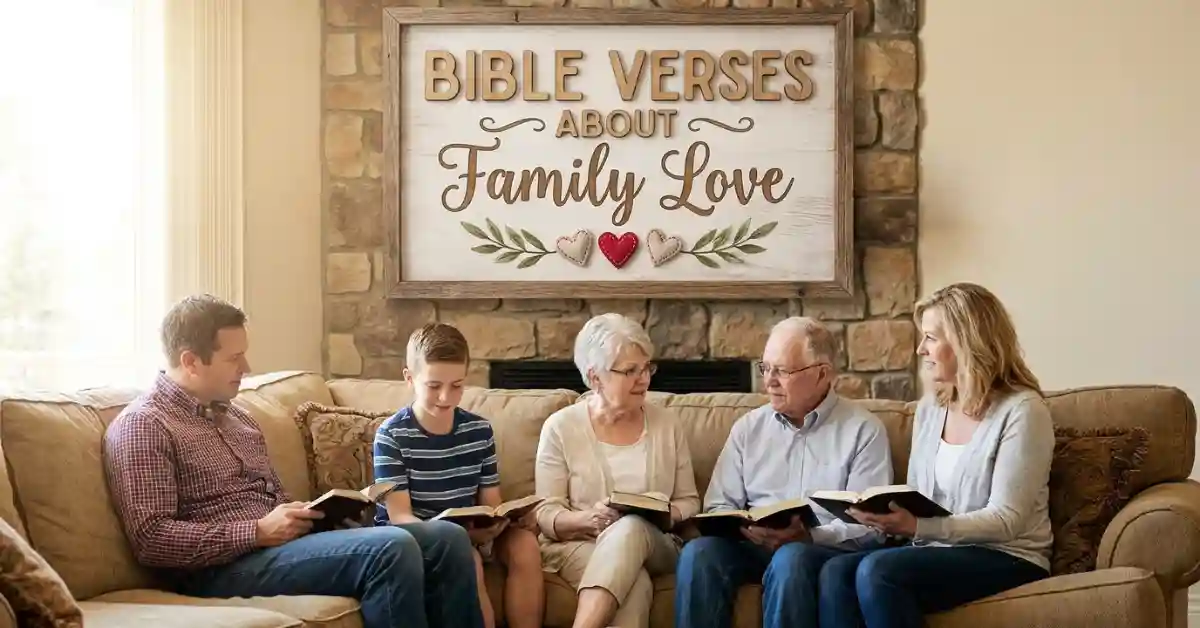
Home should be the safest place on earth. Yet many of us carry hurts from the people we love most. If that sounds familiar, you are not alone, and God has not forgotten your family. These 24 Bible verses about family love speak to marriage, parenting, brothers and sisters, and forgiveness.
They also offer comfort when family falls short. Each verse includes the story behind it, a plain-language meaning, and one small step for today. You will also find a quick-glance list, a comparison table, a prayer guide, and answers to common questions. All quotes come from the King James Version (KJV).
What Does the Bible Say About Family Love?
The Bible says family love is a choice to give, forgive, and stay loyal. It begins with God’s own love for us. Husbands and wives serve each other. Parents guide children gently. Children honor parents. Brothers and sisters seek peace. And when family fails, God steps in to care.
Three old words help explain this love:
- Agape (Greek): love that gives without asking for anything back.
- Chesed (Hebrew): faithful love that keeps its promises.
- Charis (Greek): grace, a free gift you do not have to earn.
For a deeper look, read [link to related verse/topic on blessingsvault.com].
Top 7 Bible Verses About Family Love at a Glance
If you only have a minute, start with these five. They cover patient love, unity, forgiveness, and a faith-filled home.
| Verse | Theme | One-Line Meaning |
|---|---|---|
| 1 Corinthians 13:4 | Patient love | Real love is kind, humble, and patient. |
| Colossians 3:14 | Love that unites | Love ties every other good habit together. |
| Ephesians 4:32 | Forgiveness | Forgive others the way God forgave you. |
| Psalm 133:1 | Family unity | Peace between relatives is a gift worth protecting. |
| Joshua 24:15 | A faith-led home | A household can choose to follow God together. |
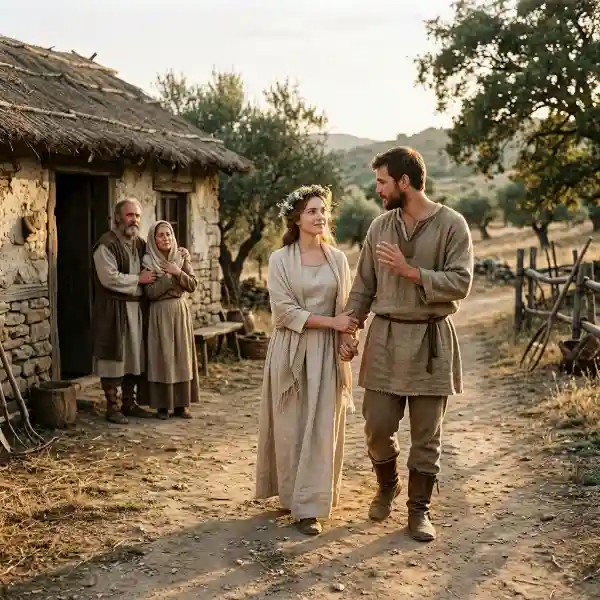
Genesis 2:24 – Marriage Love: God’s Design for the Home
“Therefore shall a man leave his father and his mother, and shall cleave unto his wife: and they shall be one flesh.” (KJV)
What It Means
Moses is traditionally seen as the writer of Genesis. This verse shows God’s plan for the first family in Eden. The Hebrew word for “cleave,” dabaq, means to hold on tight.
How to Use It Today
Give your spouse five minutes of full attention. Then name one thing you love about them.
Ephesians 5:25 – Marriage Love: Sacrificial Love Like Christ
“Husbands, love your wives, even as Christ also loved the church, and gave himself for it;” (KJV)
What It Means
Ephesians was a letter to Christians in a busy Roman port city. Husbands there held great power over their homes. Paul told them to copy Jesus, whose love, called agape in Greek, gives instead of takes.
How to Use It Today
Do one quiet kindness for your spouse. Take over a chore before being asked.
1 Corinthians 13:4 – Marriage Love: What Patient, Kind Love Looks Like
“Charity suffereth long, and is kind; charity envieth not; charity vaunteth not itself, is not puffed up,” (KJV)
What It Means
Corinth was a proud, noisy city, and its church argued a lot. Paul answered with a clear picture of real love. The old English word “charity” here means agape, love that gives itself away.
How to Use It Today
Choose one word from this verse, like patient. Practice it on the person who tries you most.
Deuteronomy 6:7 – Parenting Love: Teaching Faith in Everyday Moments
“And thou shalt teach them diligently unto thy children, and shalt talk of them when thou sittest in thine house, and when thou walkest by the way, and when thou liest down, and when thou risest up.” (KJV)
What It Means
Moses gave these words just before Israel entered the Promised Land. They follow the Shema, a famous prayer that begins “Hear, O Israel.” Back then, children learned about God mostly at home.
How to Use It Today
On your next car ride, share one thing God taught you lately. Ask your child to share theirs.
psalm 127:3 – Parenting Love: Children Are a Gift From God
“Lo, children are an heritage of the LORD: and the fruit of the womb is his reward.” (KJV)
What It Means
Pilgrims sang this psalm while walking up to Jerusalem. It is linked to King Solomon. “Heritage” comes from nachalah, a Hebrew word for land handed down in a family, so children are a treasure from the LORD.
How to Use It Today
Tell your child they are a gift. Say it out loud and say it warmly.
Proverbs 22:6 – Parenting Love: Loving Direction for Children
“Train up a child in the way he should go: and when he is old, he will not depart from it.” (KJV)
What It Means
Solomon was Israel’s wisest king, and he gathered many proverbs. A proverb is a short saying about how life usually works. It is not a promise, so parents of wandering children should not blame themselves.
How to Use It Today
Pick one value, like honesty. Live it in front of your child this week.
Ephesians 6:4 – Parenting Love: Gentle Discipline That Builds Up
“And, ye fathers, provoke not your children to wrath: but bring them up in the nurture and admonition of the Lord.” (KJV)
What It Means
In Roman times, a father could rule his home without limits. Paul asked fathers to be gentle instead. His Greek words mean loving training and kind teaching.
How to Use It Today
When you correct your child, keep your voice calm. Explain why, and point them toward God’s love.
3 John 1:4 – Parenting Love: A Parent’s Greatest Joy
“I have no greater joy than to hear that my children walk in truth.” (KJV)
What It Means
John, an older church leader, wrote this short letter to his friend Gaius. He sounds like a proud and loving parent. Seeing others live by God’s truth made him happiest.
How to Use It Today
Pray for each child by name. Ask God to help them follow him.
Exodus 20:12 – Honoring Parents: Respect as an Act of Love
“Honour thy father and thy mother: that days may be long upon the land which the LORD thy God giveth thee.” (KJV)
What It Means
God gave the Ten Commandments to Israel at Mount Sinai. This one is about family life. The Hebrew word for honour means to treat someone as important.
How to Use It Today
Call or visit a parent or older relative. Thank them for one specific thing.
Proverbs 17:6 – Honoring Generations: Grandchildren and Grandparents
“Children’s children are the crown of old men; and the glory of children are their fathers.” (KJV)
What It Means
In ancient Israel, grandparents, parents, and kids often lived close together. Solomon shows how each generation gives the others pride. Love in a family flows both ways.
How to Use It Today
Ask a grandparent for a story from their childhood. Write it down to keep.
Ruth 1:16 – Family Loyalty: Staying Close Through Hard Times
“Intreat me not to leave thee, or to return from following after thee: for whither thou goest, I will go; and where thou lodgest, I will lodge: thy people shall be my people, and thy God my God:” (KJV)
What It Means
Ruth was a young widow from Moab, a land next to Israel. She said these words to her mother-in-law, Naomi, on the road to Bethlehem. Her faithful love, called chesed in Hebrew, later made her the great-grandmother of King David.
How to Use It Today
Think of a relative who feels alone. Reach out and say you are staying close.
Joshua 24:15 – Family Loyalty: Leading Your Household in Faith
“but as for me and my house, we will serve the LORD.” (KJV)
What It Means
Joshua led Israel after Moses died. He spoke at Shechem, where the people renewed their promise to follow God. He said his own household had already made its choice.
How to Use It Today
Start one small habit that puts God at the center of your home. A mealtime prayer works well.
John 19:27 – Family Loyalty: Caring for Aging and Vulnerable Relatives
“Then saith he to the disciple, Behold thy mother! And from that hour that disciple took her unto his own home.” (KJV)
What It Means
Jesus spoke these words from the cross outside Jerusalem. Even in terrible pain, he made sure his mother Mary had a home. In that culture, a widow needed family to look after her.
How to Use It Today
Think of an older or weaker relative. Offer a visit, a meal, or a ride this week.
Psalm 133:1 – Sibling Unity: The Beauty of Harmony at Home
“Behold, how good and how pleasant it is for brethren to dwell together in unity!” (KJV)
What It Means
King David wrote this song for pilgrims heading to Jerusalem for the big feasts. The Hebrew word yachad simply means “together.” The psalm pictures brothers and sisters at peace, as sweet as fragrant oil.
How to Use It Today
Is a sibling on your heart? Send a kind note, or just write, “I miss you.”
Proverbs 17:17 – Sibling Unity: Brothers and Sisters Who Stand Together
“A friend loveth at all times, and a brother is born for adversity.” (KJV)
What It Means
Solomon says real love does not come and go. The Hebrew word ahav means deep affection. In ancient Israel, brothers were expected to stand by each other in trouble.
How to Use It Today
Check on a sibling who may be having a hard time. Offer one specific kind of help.
Ephesians 4:32 – Forgiveness: Kindness That Keeps Families Close
“And be ye kind one to another, tenderhearted, forgiving one another, even as God for Christ’s sake hath forgiven you.” (KJV)
What It Means
Paul was in a Roman prison when he wrote this letter. He asked believers to forgive as God forgave them through Jesus Christ. The Greek word for forgive, charizomai, comes from the word for grace, a free gift.
How to Use It Today
Let go of one old hurt toward a family member. Start by praying about it.
Colossians 3:14 – Forgiveness: Love Is the Bond That Holds Families Together
“And above all these things put on charity, which is the bond of perfectness.” (KJV)
What It Means
Colossae was a small town with a young church. Paul told believers to “put on” kindness and patience like clothes. Love is the last piece that ties everything together.
How to Use It Today
When tempers rise, stop and take a breath. Choose the loving answer first.
1 Peter 4:8 – Forgiveness: Love That Covers Mistakes
“And above all things have fervent charity among yourselves: for charity shall cover the multitude of sins.” (KJV)
What It Means
Peter, one of Jesus’ closest friends, wrote to Christians suffering across the Roman Empire. “Fervent” comes from ektenes, a Greek word meaning stretched, like a runner reaching for the finish line. This love does not ignore wrong, but it chooses grace over grudges.
How to Use It Today
When someone in your family lets you down, answer with patience. Skip the reminder of their past mistakes.
Romans 12:18 – Forgiveness: Pursuing Peace With Difficult Relatives
“If it be possible, as much as lieth in you, live peaceably with all men.” (KJV)
What It Means
The church in Rome mixed Jews and non-Jews, and they often clashed. The phrase “as much as lieth in you” admits that peace takes two people. You can only do your own part.
How to Use It Today
Ask what your part in a family tension is, and do it. If you feel unsafe, set firm boundaries and talk with a pastor or counselor.
Genesis 50:20 – Forgiveness: God Can Heal Painful Family Wounds
“But as for you, ye thought evil against me; but God meant it unto good, to bring to pass, as it is this day, to save much people alive.” (KJV)
What It Means
Joseph said this to the brothers who had sold him into slavery. Years later, in Egypt, he forgave them. His story shows that God can work even through deep family pain, though healing often takes time.
How to Use It Today
Bring an old family hurt to God in prayer. Ask for grace to forgive, even if mending the relationship takes a long while.
Luke 15:20 – Forgiveness: A Welcoming Love for the One Who Wandered
“And he arose, and came to his father. But when he was yet a great way off, his father saw him, and had compassion, and ran, and fell on his neck, and kissed him.” (KJV)
What It Means
Jesus told this story, called the parable of the prodigal son, to show God’s heart. The Greek word for “compassion,” splagchnizomai, means a deep ache of mercy. In that culture, a father running to meet his son was shocking.
How to Use It Today
Tell a wandering loved one that the door is open. Offer a welcome, not a lecture.
Psalm 27:10 – When Family Fails: God Takes You In
“When my father and my mother forsake me, then the LORD will take me up.” (KJV)
What It Means
King David wrote many psalms while running from enemies. Some came from deep loneliness and rejection. The Hebrew word asaph, “take me up,” means to gather in, like welcoming a guest.
How to Use It Today
If family has hurt you, tell God how you really feel. If the pain feels heavy, a trusted counselor can walk with you too.
Psalm 68:6 – When Family Fails: God Gives the Lonely a Family
“God setteth the solitary in families:” (KJV)
What It Means
Just before this verse, David calls God a “father of the fatherless.” The Hebrew word yachid describes someone who is alone. God places such people among families and communities.
How to Use It Today
Invite someone who is alone to your table. A neighbor, coworker, or new church member would love it.
Mark 3:35 – When Family Fails: The Family of Faith
“For whosoever shall do the will of God, the same is my brother, and my sister, and mother.” (KJV)
What It Means
In Galilee, Jesus’ relatives came looking for him while he taught. He pointed to his listeners and called them his true family. He still loved his mother, but he showed that God’s family is bigger than blood.
How to Use It Today
Find someone at church who needs a family. Make them feel welcome this week.
1 John 4:7 – When Family Fails: Every Family Love Begins With God
“Beloved, let us love one another: for love is of God; and every one that loveth is born of God, and knoweth God.” (KJV)
What It Means
John wrote this to early Christians who needed a reminder about love. He says God himself is the source of love. Every kind act at home starts with his love for us.
How to Use It Today
Start your morning by asking God to fill you with love. Then pour it out on your family.
How to Pray About Family Love
Prayer is a simple way to invite God into your home. You do not need fancy words. Try these steps:
- Tell God honestly how your family feels right now.
- Thank him for one specific person in your home.
- Pray a verse back to him, such as Psalm 127:3 or Colossians 3:14.
- Ask for help with one hard relationship, including the strength to forgive.
- Pray for each family member by name.
- Sit quietly for a minute, then take one small loving action.
Bible Verses About Family Love Compared by Relationship
Family love looks a little different in each relationship. Spouses serve, parents teach, siblings seek peace, and everyone forgives. This table shows which verses fit each need. Use it to find the right scripture fast, then try the simple first step beside it. More topics are waiting at [link to related verse/topic on blessingsvault.com].
| Relationship | Key Verses | What God Asks | Simple First Step |
|---|---|---|---|
| Husband and wife | Genesis 2:24, Ephesians 5:25, 1 Corinthians 13:4 | Stay faithful and serve each other | Give five minutes of full attention |
| Parents and children | Deuteronomy 6:7, Psalm 127:3, Proverbs 22:6, Ephesians 6:4, 3 John 1:4 | Teach, guide gently, and treasure each child | Pray for each child by name |
| Older generations | Exodus 20:12, Proverbs 17:6, John 19:27 | Show respect and offer care | Call a parent or grandparent |
| Loyal, faith-led homes | Ruth 1:16, Joshua 24:15 | Stay committed and put God first | Start one shared prayer habit |
| Brothers and sisters | Psalm 133:1, Proverbs 17:17 | Seek peace and stand together | Send a kind note |
| Forgiveness and conflict | Ephesians 4:32, Colossians 3:14, 1 Peter 4:8, Romans 12:18, Genesis 50:20, Luke 15:20 | Forgive, pursue peace, and welcome | Hand one old hurt to God in prayer |
| Hurting or broken families | Psalm 27:10, Psalm 68:6, Mark 3:35, 1 John 4:7 | Lean on God and the church family | Invite someone to your table |
Frequently Asked Questions
What is the best Bible verse about family love?
Many readers choose 1 Corinthians 13:4, which describes love as patient and kind. Colossians 3:14 is another favorite because it calls love the bond that holds everything together. The best verse is the one that speaks to your family’s need right now.
What does the Bible say about family unity?
Psalm 133:1 says it is good and pleasant when relatives live together in unity. The Bible also shows that unity takes effort, kindness, and forgiveness. Romans 12:18 reminds us to do our part for peace.
What does the Bible say about a family that doesn’t get along?
The Bible admits that peace takes two people. You are asked to do your part and trust God with the rest. There are no guarantees, but forgiveness and patience can soften hard hearts over time. For ongoing conflict, a pastor or counselor can help. See also [link to related verse/topic on blessingsvault.com].
How do I love a family member who hurts me?
Biblical love means choosing to seek someone’s good. It does not mean putting up with harm. If you feel unsafe, step back and get help right away. A pastor or licensed counselor can guide you, because faith works alongside professional care, not instead of it.
Does the Bible say family comes first?
The Bible values family highly. It asks us to honor parents and care for relatives, as 1 Timothy 5:8 shows. Jesus also said loving God must come first (Matthew 10:37). When God is first, our love for family can grow deeper. Read more at [link to related verse/topic on blessingsvault.com].
Which Bible verses can I pray over my children?
Psalm 127:3, Proverbs 22:6, Ephesians 6:4, and 3 John 1:4 are good choices. Say them aloud with your child’s name in them. Ask God to guide both of you. Find more at [link to related verse/topic on blessingsvault.com].
Conclusion
These Bible verses about family love share one message. Love at home grows through patience, loyalty, and forgiveness, and God helps where we fall short. No family is perfect, and healing often takes time. Faith walks beside good counseling and medical care, never in place of them. Take a quiet minute and ask which verse touched your heart most. Let it guide one small act of love today. Keep reading at [link to related verse/topic on blessingsvault.com].

Hi, I’m James Walker , the creator of Blessings Vault. I write meaningful blessings, wishes, and inspirational messages to help people find the right words for every moment. My goal is to create content that is simple, heartfelt, and truly helpful for readers.