
Every parent has stood by a child’s bed at night, wishing for the right words. Bible verses for children can be those words. They are short, simple, and easy to carry in a small heart. This guide shares 25 of them, from Genesis to the letters of Paul. Each comes with a plain explanation and the story behind it. You also get one easy way to use it at home or in Sunday school. Use them for bedtime, hard days, and happy ones. Themes include God’s love, courage, kindness, and thankfulness. Every verse comes from the King James Version (KJV), with its older words explained.
What Does the Bible Say About Children?
The Bible says children are precious to God, loved by Jesus, and able to know Him from a young age. Parents are asked to teach them God’s ways with patience and love. Kids are not too small to pray, learn Scripture, or set a good example. God sees every child as made on purpose.
“Scripture” simply means the Bible’s written words. Jewish families in Bible times taught children by telling stories and repeating God’s words at home. The verses below follow that same simple path. These verses bring comfort and guidance. They do not replace help from a doctor or counselor when a child needs it.
Top 5 Bible Verses for Children at a Glance
Five great Bible verses for children to start with are John 3:16, psalm 119:105, Psalm 56:3, Ephesians 4:32, and Psalm 139:14. Together they teach God’s love, the guiding power of His Word, courage when afraid, kindness, and how special each child is. Details on all 25 verses follow below.
| Verse | Theme | One-Line Meaning |
|---|---|---|
| John 3:16 | God’s love | God loved the world so much that He sent Jesus to save everyone who believes. |
| Psalm 119:105 | God’s Word | The Bible shows us the next right step, like a small lamp in the dark. |
| Psalm 56:3 | Courage and trust | When we feel scared, we can bring our fear to God. |
| Ephesians 4:32 | Kindness | God forgave us, so we can be kind and forgive others. |
| Psalm 139:14 | Made by God | God made every child on purpose, with great care. |
More scriptures about God’s love: [link to related verse/topic on blessingsvault.com]
Bible Verses About God’s Love for Children
1. John 3:16 – God’s Love: He Gave His Only Son
“For God so loved the world, that he gave his only begotten Son, that whosoever believeth in him should not perish, but have everlasting life.” (KJV)
What It Means
One night, a Jewish teacher named Nicodemus came to Jesus with questions. Jesus answered with these words, which John later wrote down. The Greek word for love here, agape, means a love that gives and keeps giving.
How to Use It Today
Put your child’s name in the verse, like “God so loved Maya.” Then read the Easter story together.
2. 1 John 4:19 – God’s Love: We Love Because He Loved First
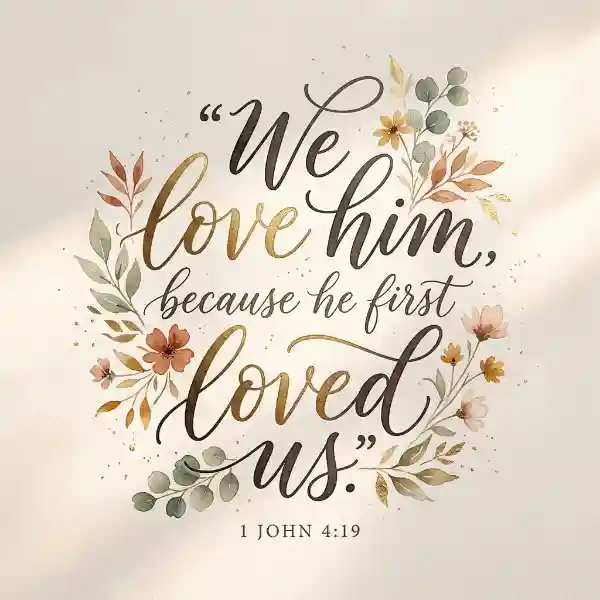
“We love him, because he first loved us.” (KJV)
What It Means
In a letter to early Christians, Jesus’ close friend John explained how love works. God loves first. We answer by loving Him and others.
How to Use It Today
At bedtime, name one moment you saw God’s love that day. Then let your child name one too.
3. Matthew 19:14 – God’s Love: Jesus Welcomes Children
“But Jesus said, Suffer little children, and forbid them not, to come unto me: for of such is the kingdom of heaven.” (KJV)
What It Means
Parents brought their children to Jesus, but His followers tried to send them away. Jesus said, “Let them come,” because “suffer” in old English means “allow.” God’s kingdom, His loving rule, belongs to hearts that trust like a child’s.
How to Use It Today
Remind your child that Jesus welcomes them right now. They can pray any time, in their own words.
4. Psalm 23:1 – God’s Love: The LORD Is Your Shepherd
“The LORD is my shepherd; I shall not want.” (KJV)
What It Means
Before he was a king, David was a shepherd boy near Bethlehem. He knew how a shepherd feeds and guards sheep. So “I shall not want” means “I have all I truly need.”
How to Use It Today
Say the first half at bedtime and let your child finish the rest. Talk about how a shepherd keeps sheep safe at night.
Bible Verses About Being Made and Loved by God
5. Genesis 1:1 – Made by God: The Creator of Everything
“In the beginning God created the heaven and the earth.” (KJV)
What It Means
The Bible opens with this verse, thought to be written by Moses, who led Israel out of Egypt. The Hebrew word for “created,” bara, is used in the Bible only for God’s work. God’s name here is Elohim, a Hebrew name for the Creator.
How to Use It Today
Take a walk and let your child point out things God made. Then say the verse together.
6. Psalm 139:14 – Made by God: You Are Wonderfully Made
“I will praise thee; for I am fearfully and wonderfully made: marvellous are thy works; and that my soul knoweth right well.” (KJV)
What It Means
David sang this song to thank God for making him. The word “fearfully” means with awe and wonder. Every child is built with great care.
How to Use It Today
When your child feels small, stand at a mirror together. Remind them that God made them on purpose.
7. Psalm 100:3 – Made by God: You Belong to Him
“Know ye that the LORD he is God: it is he that hath made us, and not we ourselves; we are his people, and the sheep of his pasture.” (KJV)
What It Means
People in ancient Israel sang this song as they walked up to worship. Many of them kept sheep, so they knew what it meant to belong to a shepherd. The verse says God made us, and we are His.
How to Use It Today
Ask your child to name gifts they did not make, like sunshine or friends. Then thank God together for making them too.
Bible Verses About God’s Word and Learning Scripture
8. Psalm 119:105 – God’s Word: A Lamp for Your Path
“Thy word is a lamp unto my feet, and a light unto my path.” (KJV)
What It Means
Psalm 119, the longest chapter in the Bible, praises God’s teaching, called Torah in Hebrew. In Bible times, an oil lamp lit only the next few steps. God’s Word guides us the same way.
How to Use It Today
Walk through a dim room with a flashlight and notice each lit step. Then ask, “What does the Bible say?” when your child faces a choice.
9. Psalm 119:11 – God’s Word: Hide It in Your Heart
“Thy word have I hid in mine heart, that I might not sin against thee.” (KJV)
What It Means
Think of a treasure hunt. The writer saved God’s words deep inside, like something precious. The Hebrew word for “hid” means to store up.
How to Use It Today
Explain that sin means a wrong choice. Verses we know by heart can help us choose well.
10. 2 Timothy 3:15 – God’s Word: Learn Scripture from Childhood
“And that from a child thou hast known the holy scriptures, which are able to make thee wise unto salvation through faith which is in Christ Jesus.” (KJV)
What It Means
Paul wrote to Timothy, a young church leader raised by his mother Eunice and grandmother Lois, who shared their faith. Back then, “the holy scriptures” meant the Old Testament. Paul says these writings lead to wisdom and to being rescued by God through Jesus Christ.
How to Use It Today
Read one short Bible story each day. What your child hears now can stay with them for years.
Bible Verses About Courage and Trust for Children
11. Psalm 56:3 – Courage and Trust: Bible Verse for When You’re Afraid
“What time I am afraid, I will trust in thee.” (KJV)
What It Means
David wrote this when enemy soldiers caught him in the city of Gath. He was truly scared. “What time” is old English for “when.”
How to Use It Today
Teach it as a bedtime prayer for storms and bad dreams. Being afraid is not wrong, and God welcomes those feelings.
12. Joshua 1:9 – Courage and Trust: Be Strong and Courageous
“Have not I commanded thee? Be strong and of a good courage; be not afraid, neither be thou dismayed: for the LORD thy God is with thee whithersoever thou goest.” (KJV)
What It Means
Moses had died, and now Joshua had to lead Israel across the Jordan River. That was a big job for a new leader. God gave him a reason to be brave, His promise to stay near.
How to Use It Today
Share it before a first day of school, a tryout, or a doctor visit. It reminds your child that bravery grows when we know God is near.
13. Isaiah 41:10 – Courage and Trust: God Will Help You
“Fear thou not; for I am with thee: be not dismayed; for I am thy God: I will strengthen thee; yea, I will help thee; yea, I will uphold thee with the right hand of my righteousness.” (KJV)
What It Means
Isaiah was a prophet, a messenger who spoke for God. Big, powerful nations scared the people of Israel in his day. Here, God promises to help them and hold them up.
How to Use It Today
Hold your child’s hand as you read this. A steady grip can picture God’s steady care.
14. 1 Peter 5:7 – Courage and Trust: Give God Your Worries
“Casting all your care upon him; for he careth for you.” (KJV)
What It Means
Peter was a fisherman before he followed Jesus. He wrote to Christians who were treated badly for their faith. “Casting” means throwing, like tossing a heavy backpack to a strong friend.
How to Use It Today
Let your child draw a worry, pray over it, and drop it in a “God cares” box. If worry stays heavy, a doctor or counselor can help, and faith and care can work together.
15. Proverbs 3:5–6 – Courage and Trust: Trust the LORD with All Your Heart
“Trust in the LORD with all thine heart; and lean not unto thine own understanding. In all thy ways acknowledge him, and he shall direct thy paths.” (KJV)
What It Means
King Solomon, David’s son, was known as the wisest man in Israel. He wrote Proverbs to teach young people how to live. To “acknowledge” God means to include Him in everything we do.
How to Use It Today
When a choice feels hard, stop and pray together first. Trusting God does not make life easy, but it helps us not walk alone.
16. Philippians 4:13 – Courage and Trust: Strength from Christ
“I can do all things through Christ which strengtheneth me.” (KJV)
What It Means
Paul wrote these words from a prison cell. Even there, he had learned to be content. His strength came from Christ, the one God sent to save us.
How to Use It Today
Use it when learning something hard, like reading or riding a bike. It means Jesus helps us keep trying, not that we will always win.
Bible Verses About Kindness and Obedience
17. Ephesians 4:32 – Kindness and Obedience: Be Kind and Forgive
“And be ye kind one to another, tenderhearted, forgiving one another, even as God for Christ’s sake hath forgiven you.” (KJV)
What It Means
Ephesus was a busy port city in Asia Minor, which is now part of Turkey. Paul wrote a letter there urging Christians to be kind. Since God forgave us first, we can forgive others too.
How to Use It Today
After a sibling squabble, walk through an apology and a hug. You might also retell how Joseph forgave his brothers.
More Bible verses about forgiveness for kids: [link to related verse/topic on blessingsvault.com]
18. Luke 6:31 – Kindness and Obedience: The Golden Rule
“And as ye would that men should do to you, do ye also to them likewise.” (KJV)
What It Means
Luke, a doctor, wrote one of the four Gospels, the books about Jesus’ life. In this one, Jesus teaches the Golden Rule to a crowd. It means treating others the way you want to be treated.
How to Use It Today
Ask, “How would you want to be treated?” before a conflict gets big. Try reading the story of the Good Samaritan together.
19. Proverbs 15:1 – Kindness and Obedience: Speak Gently
“A soft answer turneth away wrath: but grievous words stir up anger.” (KJV)
What It Means
Words can act like water or fuel on a campfire. Solomon taught that gentle words cool anger down. “Wrath” is an old word for anger.
How to Use It Today
Practice a calm reply together during a pretend argument. Praise your child when they try it in real life.
20. Ephesians 6:1 – Kindness and Obedience: Honor Your Parents
“Children, obey your parents in the Lord: for this is right.” (KJV)
What It Means
Picture children sitting in church while this letter was read aloud. Paul spoke straight to them, which shows God values kids. The Greek word for “obey” means to listen and respond.
How to Use It Today
Thank your child when they obey with a happy heart. Tell them it pleases God, not just you.
21. 1 Timothy 4:12 – Kindness and Obedience: Set a Good Example
“Let no man despise thy youth; but be thou an example of the believers, in word, in conversation, in charity, in spirit, in faith, in purity.” (KJV)
What It Means
Some older people may have doubted young Timothy, a church leader. Paul told him not to let anyone look down on him. In old English, “conversation” means how you live, and “charity” means love.
How to Use It Today
Tell your child that kind actions and honest words show Jesus to others, no matter their age.
Bible Verses About Prayer and Thankfulness
22. 1 Thessalonians 5:17 – Prayer and Thanks: Pray All Day Long
“Pray without ceasing.” (KJV)
What It Means
Thessalonica was a busy port city in Macedonia, home to a brand-new church. Paul wrote to cheer on people who had just begun to follow Jesus. “Without ceasing” means a habit of coming back to God, not nonstop talking.
How to Use It Today
Teach tiny prayers, like “Thank You, God” or “Help me, Lord.” Use them in the car, at meals, or before a test.
23. 1 Thessalonians 5:18 – Prayer and Thanks: Give Thanks in Everything
“In every thing give thanks: for this is the will of God in Christ Jesus concerning you.” (KJV)
What It Means
The same letter also invites thanks. The Greek word, eucharisteo, is the root of “grateful.” It means thanking God in hard times, not calling hard things good.
How to Use It Today
Over dinner, let everyone share one thing they are thankful for. Small things count.
24. Psalm 118:24 – Prayer and Thanks: Rejoice in This Day
“This is the day which the LORD hath made; we will rejoice and be glad in it.” (KJV)
What It Means
At festivals like Passover, which remembers how God rescued Israel from Egypt, people sang praise songs. This psalm was one of them. It calls each day a gift from God.
How to Use It Today
Say it at breakfast to start the morning with a smile, even on Mondays.
25. Numbers 6:24–26 – Prayer and Thanks: A Blessing for Your Child
“The LORD bless thee, and keep thee: The LORD make his face shine upon thee, and be gracious unto thee: The LORD lift up his countenance upon thee, and give thee peace.” (KJV)
What It Means
God gave Moses this blessing for Aaron, Israel’s first priest, to speak over the people. Silver scrolls found near Jerusalem, over 2,500 years old, have words very like it. Shalom, the Hebrew word for peace, means wholeness and safety.
How to Use It Today
Speak it over your child at bedtime with a hand on their shoulder. It is a prayer asking for God’s care.
More bedtime blessings for kids: [link to related verse/topic on blessingsvault.com]
How to Pray About Bible Verses with Your Child
To pray a Bible verse with your child, read it slowly, say what it means in one sentence, and turn it into a short prayer. Let your child pray in their own words. It takes only a few minutes and works at any age.
- Pick one verse that fits what your child is facing today.
- Read it slowly and let your child repeat it after you.
- Say what it means in one short sentence.
- Turn it into a prayer, either thanking God for the truth or asking for His help.
- Let your child speak, since even one sentence from them is a real prayer.
- Close with “amen,” which means “let it be so.”
Here is a short prayer to pray together:
“Dear God, thank You for loving me and making me on purpose. Help me be brave when I’m scared. Help me be kind when it’s hard. Help me be thankful every day. Keep Your words in my heart. In Jesus’ name, amen.”
Easy Ways to Teach Bible Verses to Children: Which Fits Your Child?
The best way to teach Bible verses to children is to keep it short, fun, and repeated. Pick a method that fits your child’s age, review a little each day, and aim for one new verse a week.
| Method | Best For | How It Works | Time Needed |
|---|---|---|---|
| Hand motions | Ages 2–6 | Add an action to each key word. | 5 minutes a day |
| Songs and rhymes | All ages | Set the words to a simple tune. | 5–10 minutes |
| Drawing | Ages 4–10 | Draw a small picture for each phrase. | 10 minutes |
| Fill-in-the-blank games | Ages 6–12 | Hide one word at a time and guess it. | 5 minutes |
| Verse cards | Ages 6 and up | Write the verse on a card and keep it in sight. | A glance a day |
| Bedtime prayer | All ages | Pray the verse in your own words each night. | 2–3 minutes |
Frequently Asked Questions About Bible Verses for Children
What Is the Best Bible Verse for Kids to Memorize?
The best verse is a short one your child understands. Many families start with verses about God’s love, then add courage and kindness. Pick one that fits what your child is facing this week.
What Age Should a Child Start Learning Bible Verses?
Most children can start around age 3, one short phrase at a time. Hearing Scripture read aloud is a gentle start, even before a child can speak. Older children can handle longer verses.
Which Bible Translation Is Best for Kids?
The best translation is the one your child understands. The NIrV was made for new readers, and many families match the Bible their church uses. Pick one for each child so a verse stays the same in their mind.
How Many Bible Verses Should a Child Learn at a Time?
One verse at a time is plenty. Review old ones now and then so new ones can build on them. A single verse a week adds up to a whole year of Scripture.
Which Bible Verses Help a Child Who Feels Afraid or Anxious?
The courage and trust verses in this guide can comfort a worried child. Read them in calm moments so they feel familiar later. Deep or lasting fear is not a lack of faith, so please talk with a doctor or counselor too, since faith and professional care work side by side.
Is It Okay to Use Bible Verses to Correct My Child?
Use Scripture to encourage, not to shame. Show your child who God is and who they can grow to be, and keep your voice warm.
Conclusion
Bible verses for children are like seeds. God can grow them slowly over many years. Start with one verse, say it often, and pray it together. Let it meet your child in moments of fear, kindness, and joy. May God’s Word be a steady light for the little ones you love.

Hi, I’m James Walker , the creator of Blessings Vault. I write meaningful blessings, wishes, and inspirational messages to help people find the right words for every moment. My goal is to create content that is simple, heartfelt, and truly helpful for readers.